Every season brings new materials
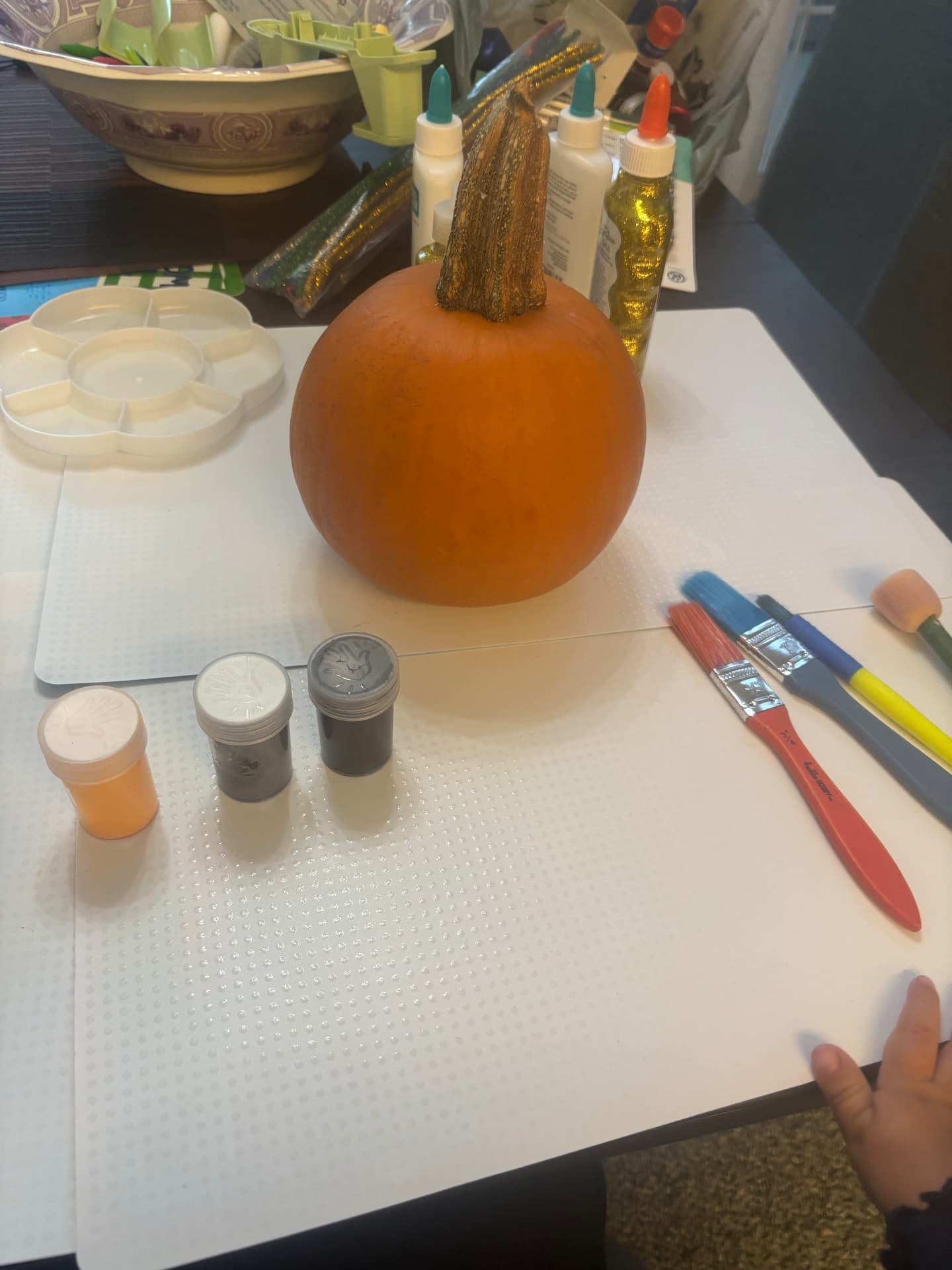
In the fall you might find pumpkins set out with paint pots and brushes, leaves collected on morning walks pressed into collages, and pinecones rolled in glitter. Winter brings salt-dough ornaments, candle windows, and gift-making. Spring is for flower pounding, seed mosaics, and dyeing with garden colors.
Because the themes change with the calendar, the same child returns to the art table month after month and meets it as a new invitation — new colors, new textures, new smells, and a new reason to create.
Many mediums, many hands
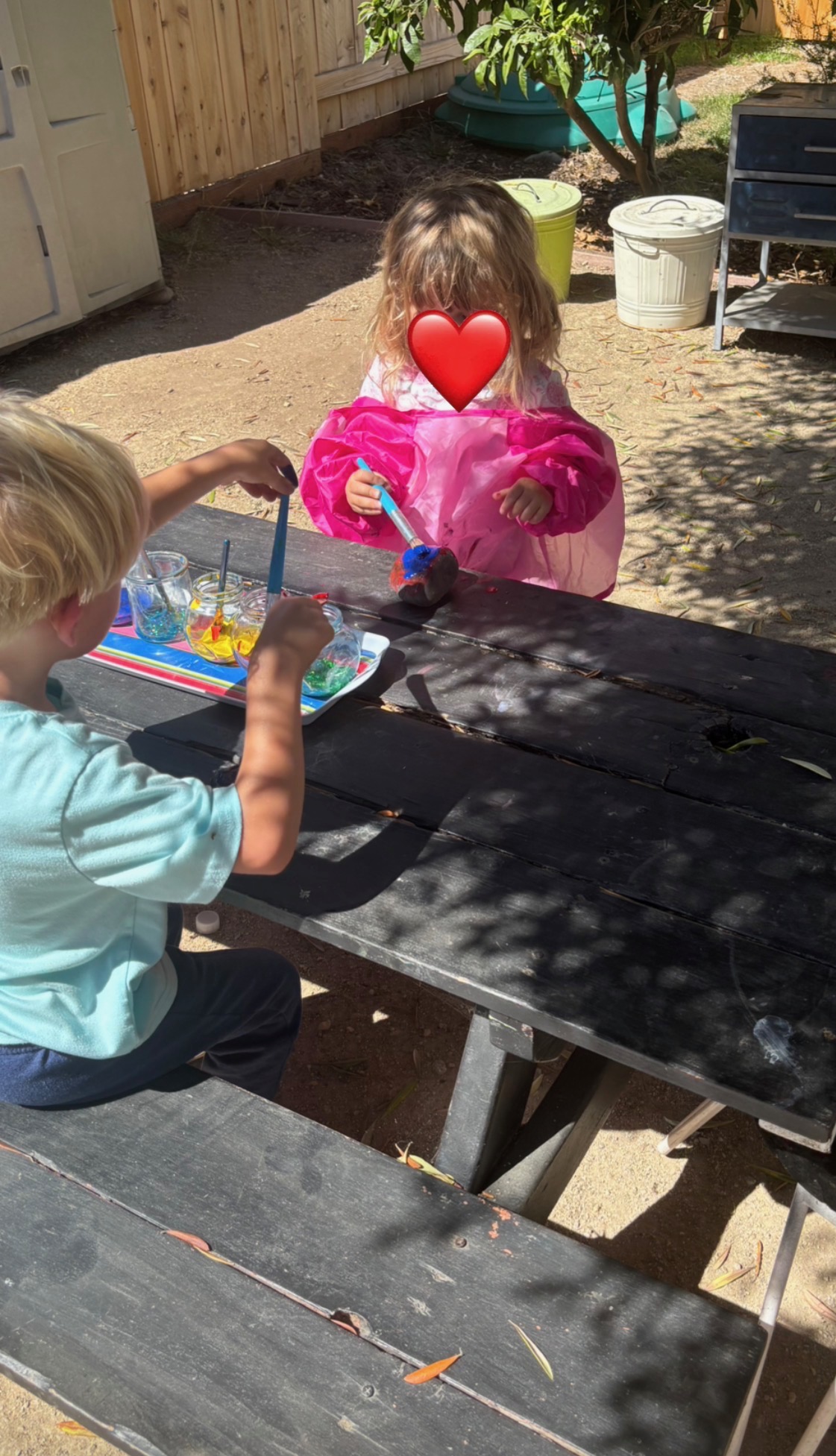
Children rotate through real artist mediums rather than one craft-for-everyone template: tempera and watercolor paint, air-dry clay, oil pastels, chalk, collage papers, fabric and yarn, natural loose parts, glue, tape, and stamps.
Some children stay with one brush and one color for a whole morning; others build a layered collage with a friend. Both are the right answer. We present the materials, show a technique, and then follow the child.
Senses first, small muscles next
Art is one of the richest sensory experiences in our week — the smell of tempera, the squish of clay, the slippery shine of glue, the scratch of a pinecone. Children explore with their whole bodies before their hands ever settle down to work.
Underneath the fun, every project is purposeful practice for small motor skills: pinching clothespins and pom-poms, squeezing glue bottles, threading beads and yarn, peeling stickers, tearing paper, and guiding a brush around a curved pumpkin. These are the same hands that will one day hold a pencil, zip a coat, and pour their own water.
Common questions
- Do you celebrate holidays with crafts?
- Yes — our art table follows the seasons and the holidays families know: pumpkins and leaves in the fall, ornaments and gifts in the winter, flowers and gardens in the spring. Projects are open-ended, so every child's version looks different.
- Can two-year-olds really do these projects?
- Yes. Materials are sized and adapted for ages two through five — chunky brushes, easy-squeeze glue, and soft clay — and teachers sit alongside children who are still learning how the tools work.
- Won't my child come home messy?
- Quite possibly, and that is a good sign. Children wear smocks for the messiest work, but we believe in process over product, and process is happily hands-on.
Ask us a question
Send a message and we'll reply within one business day — or call (805) 636-1461.